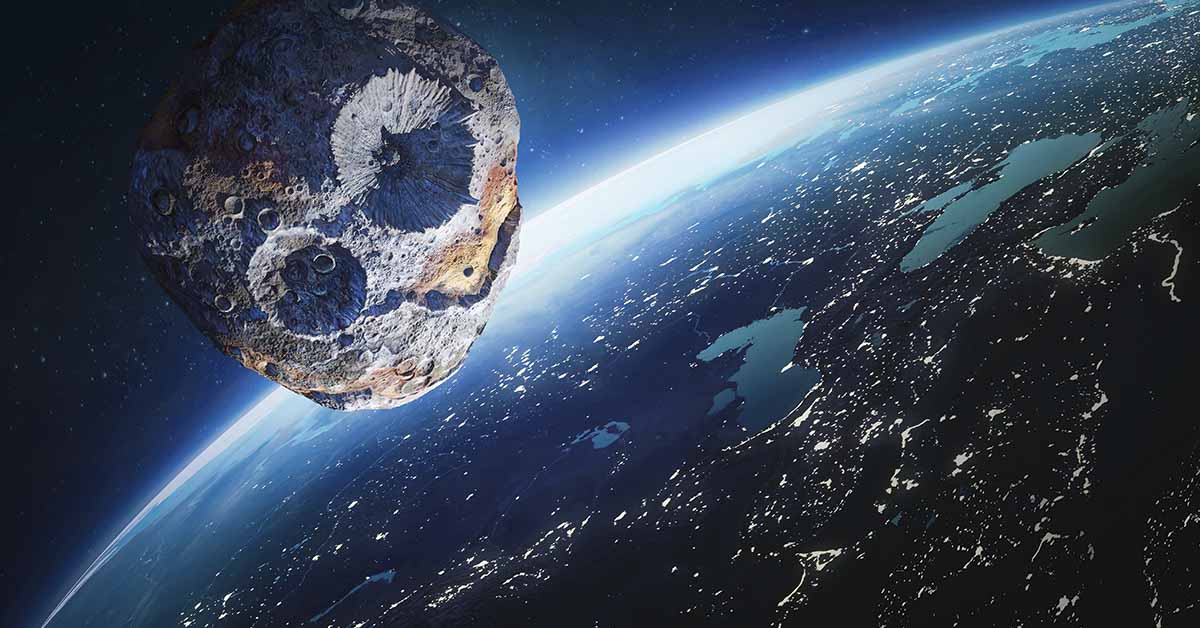

In the vastness of space, Earth is gearing up for a celestial show as five asteroids are set to make close approaches in the upcoming week. The proximity of these rocky space wanderers has drawn the attention of astronomers and space enthusiasts alike (yes, NASA is all over it). Let’s take a look at the details.
For those who aren’t aware of the differences, an asteroid is a small rock (relatively small – like 600-1000km wide) that orbits the sun and goes along on its merry way. Think of the asteroid belt between Mars and Jupiter: just rocks in space. Meteoroids and meteorites are the small rocks that enter Earth’s atmosphere, but the difference between them is that meteorites make it to Earth’s surface. If the rock enters the atmosphere but burns up along the way, it’s a simple meteoroid/meteor. Last but not least, let’s talk about comets. Comets are just like meteors in that they enter Earth’s atmosphere, but rather than being made of rock or solid compounds, they are made of ice and dust. Is everyone on the same page now? Now, back to asteroids:
The Asteroids Approacheth
The Asteroid Watch dashboard, a reliable source for tracking celestial objects, provides essential information about impending encounters.
The first to make its way by us is (2024 BA3), a car-sized asteroid with an approximate size of 19 feet. On January 30, 2024, it will approach Earth from a distance of 372,000 miles.1 This one is projected to fly the closest to us of the five, so if you feel that 372,000 miles is far enough away, the rest of this list will be easy.
Following closely on the same day, (2007 EG), an airplane-sized asteroid measuring around 130 feet will carve its way through space about 3,800,000 miles away from us.
The fly-bys continue with (2024 BY), a house-sized asteroid of approximately 63 feet. Scheduled for February 1, 2024, with an approach within 1,570,000 miles.
Read More: NASA detects new carbon compound in space for the first time
Next up is (2003 BM4), another airplane-sized asteroid with an estimated size of 120 feet. It will make its closest approach at a distance of 2,060,000 miles later the same day as 2024 BY.
The grand finale features (2008 OS7), a stadium-sized asteroid towering at 890 feet. On February 2, 2024, it will pass by Earth from a distance of 1,770,000 miles.
The size and proximity of these space rocks might sound daunting, but NASA assures us that the encounters are safe.
Close Asteroid Encounters
While these five asteroids are currently on a safe trajectory, the recent memory of Asteroid 2024 BX crashing into Earth about a week and a half ago on January 21 serves as a reminder of the unpredictability of space events. Krisztián Sárneczky at the Piszkéstető Mountain Station of the Konkoly Observatory near Budapest, Hungary, spotted the impact just three hours before it occurred.
Predicting the mood of celestial bodies is a challenging task. Even though the upcoming encounters are expected to be uneventful, the ever-changing dynamics of space leave room for uncertainties. Space is massive, and there are so many other variables that might alter the course of an object out there that we must stay vigilant in keeping track of it, as best we can.
As these asteroids paint streaks across the cosmos, Earth watches with a mix of fascination and caution. The celestial dance continues, and our gaze remains fixed on the wonders of the universe, reminding us of the beauty and unpredictability that reside beyond our atmosphere.
Read More: NASA: Asteroid Could Still Hit Earth in 2068